

As a corporate part of The New Museum of Networked Art
JavaMuseum
acting since 2000 as the “Forum for Internet Technologies in Contemporary Art”, was the 1st virtual museum for virtual art (JAVA= Joint Advanced Virtual Affairs // the association to the programming language JAVA is intended) dedicated to the phenomenon of netart in a global context.
While the original JavaMuseum had been disregarding the work of Agricola de Cologne as a (net)artist, Agricola de Cologne’s entire net based oeuvre (since 2000, as an artist and curator ) including the project of JavaMuseum have to be considered as conceptual netart.
For different reasons, also due to the radical commercial re-orientation of the Internet during more than 25 years of its existence, and as the result of this again and again the favorite software/technologies used by artists for their net based projects had been discontinued by the commercial companies causing partially the destruction of the work of entire artists generations. The meaning of netart, respectively the Internet as an artistic medium, changed fundamentally since 2010.
Due to a new orientation of The New Museum of Networked Art, starting in 2020 the transformation into The Agricola de Cologne Foundation for the Arts, JavaMuseum will take new areas of responsibility as the Institute for Media Archeology @ NICA – The New Institute for Contemporary Art @ The New Museum of Networked Art – intended to house its own new collections, particularly with a view to techniques, technologies and media that have been forgotten, as well as to the application/rapid technological development of software (hardware and computer-controlled systems for artistic purposes, some of which become outdated after just a few years), have disappeared from the scene in order to be able to make them available to artists for their use as well as to the public.
26 years – JavaMuseum – 2000-2026
What is netart?
Introduction
Founded in 2000 by Agricola de Cologne in the early, low-tech phase of the Internet, JavaMuseum was focussing on net based art as a virtual museum, a specific form of digital art based on technologies used on the Internet. At this early stage, the Internet had been seen by artists as a way to become/be independent of (what they felt) the dictatorship of the conventional/commercial art scene. These idealistic expectations never came true.
In 2001, JavaMuseum started an annual program consisting of a competition and showcase, giving the “JavaArtist-of-the-Year-Award” to outstanding artists in the fields of net based art and featured exhibitions with changing subjects.
Until 2005, JavaMuseum organized more than 20 showcases of netart in a global context, three competitions and many features including more than 1000 art works by 350 artists from 40 countries which form a unique and most comprehensive collection of net based art worldwide and in Internet.
For the 1st time, JavaMuseum was curating the virtual space in shape of a computer monitor. The used presentation software (Flash by Macromedia) allowed free interaction across the available monitor space.
JavaMuseum recognized already soon networking as a media specific aspect in art and organizing art. The necessity of collaborating/networking on different levels was determining JavMuseum’s activities from the beginning.
JavaMuseum’s excellent reputation was pushed by its participation in Wilfried Agricola de Cologne’s global networking project – [R][R][F]2004–>XP-´ (2004-2007) – while it became evident, that not only the online environment of the Internet, but also the entire global “netart” scene changed during the years.
Another important aspect represents that during this phase (differently than today) “digital art” still had not been widely accepted as a serious art form; and therefore “netart” did not emancipate (had no chance to emancipate); and used today occasionally only, remains rather in a kind of ghetto.
While the conditions for creating netart did not remain really attractive to artists due to the rather experimental status of the creation, for instance, there was no way for an artist to make one’s living through art, many of the artist pioneers retired, and new artists generations were not able to replace them in quantity and quality. According to the perspectives of this kind of reality, JavaMuseum started rethinking its original concepts when the 1st phase of activities came to an end in 2005.
JavaMuseum’s activities between 2000 and 2010, named the “1st and 2nd phase”, were manifesting themselves as a project environment encompassing the 30 showcases to be thought remaining online for permanent as a documentation of net art 2000-2010.
Generally, this extraordinary collection and the involved artists and artworks were planned to form additionally the future basis for organizing showcases in physical space in collaboration with physical institutions, as museums or galleries.
But from the retrospective point of view, these ideas had to fail because technology was developing further on. Technology/software were mostly not standing under CC (Creative Common license) but belonged to commercial companies following their commercial interests when they were discontinuing the software/technologies artists were preferably using.
On the other hand, so far there had not been successful attempts by noncommercial research institutions to compensate the obsolete technologies.
What is netart?
As the term “netart” has no (never got a) binding definition, it is good to know, how JavaMuseum was defining this term and its net based activities, thus.
Netart is in first place art, a specific form of contemporary art – digital art using specific programming languages/technologies used in Internet. “netart” is not only related to this aspect, but mainly that net based art has to be located in Internet on a URL (Internet address) of its own, and is this way it has to be available online to the user at any time. In principle, all technologies/programming languages can be used for artistic creation by programming, but not all technologies are predestined for artistic use. Not each artist is a good programmer, and not each programmer is an artist. In this way, many artists use pre-formatted software applications in order to create net based works. There are no general aesthetic criteria, as each technology/programming language has its own specific aesthetics, in addition, the communicating technologies offer new options and unexpected kinds of aesthetics. But technology represents just a tool, and it is the contents which are as relevant transported and transmitted by using the tool.
By defining “netart”, JavaMuseum does not follow any of the current ideologies, and was therefore also not restricted concerning contents or technology and open for all subjects and topics artists are working on. “Net art” as it understood and featured by JavaMuseum shows in the global context an unusual diversity of presentations and artistic positions and adds a lot of new aspects to the spectrum and general definition of contemporary art.
Since 2002, JavaMuseum started a series of netart features from different cultural regions around the globe and succeeded in presenting many artists who were not in the spotlight before, and gave an idea what could “netart” represent in a global context.
From the beginning, JavaMuseum was a piece of “netart” /contemporary art itself, as well as all platforms realized by Wilfried Agricola de Cologne online were “Internet based art”, they were located on the net using therefore related communication technology for the creation – bringing the new aspect of networking as an artistic concept and necessity. Platforms like JavaMuseum, A Virtual Memorial Foundation, New Media Fest or Engaged Arts Directory were additionally networked art on different levels, which did not only include subordinated projects, incorporated artists and curators, but also physical venues and associated cultural institutions – simulating the structures of physical institutions via artistic concepts – allowing an exchange between virtual and physical space in a worldwide collaboration – starting already in 2000.
.
JavaMuseum
[JAVA=Joint Advanced Virtual Affairs]
https://java.nmartproject.net
@ The New Museum of Networked Art
https://nmartproject.net
Director and curator:
Wilfried Agricola de Cologne
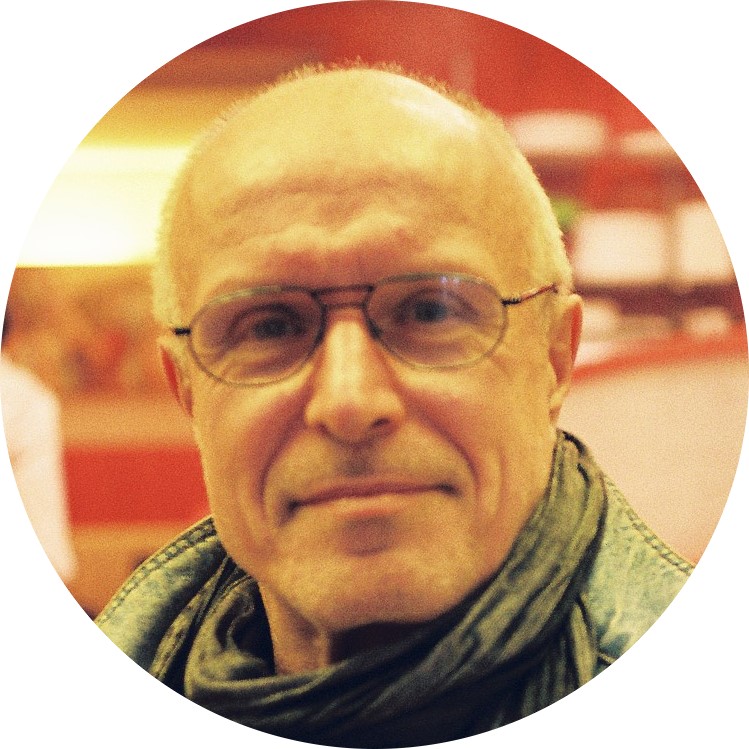
Agricola de Cologne (Cologne/Germany)
is a multidisciplinary media artist and curator living and working in Cologne/Germany .
He had more than 100 solo exhibitions in cooperation with 80 museums in Europe, South America and USA, he is participating since 2000 in more than 500 media exhibitions and festivals around the globe. His media art works received numerous prizes and awards.